
We pulled a decade of archived terms from 75 iGaming affiliate programmes. Operators holding the strictest European licences — Malta, the UK and Gibraltar chief among them — rewrote the rules against affiliates nearly eight times for every one time they improved them. The offshore ones everybody warns you about? Fewer than five.
Somewhere between 13 September and 26 December 2024, a sentence appeared in Betsson Group Affiliates' terms and conditions that had not been there before:
We reserve the right, at our sole discretion, to immediately cease or otherwise amend the Affiliate Program with regards to a Betsson Group Website, in its entirety, or, partially with respect to one or more jurisdictions. In this instance, we will not be liable to pay you any Commission which has accrued to your benefit that is attributable to such jurisdiction(s), with immediate effect and without notice to you.
You can check that yourself. Here is the September 2024 version, where the clause does not appear. Here is the December 2024 version, where it does.
Read it again slowly, because it is doing something specific. It is not saying Betsson may close the programme — every programme may. It is saying that when they do, money you have already earned stops being money you are owed. Commission that has accrued to your benefit. With immediate effect. Without notice to you.
Betsson holds a Malta Gaming Authority licence. It is a publicly listed company. It is, by most affiliate rankings, one of the safe ones.
That clause is still in the terms today. And it is not an outlier — it is one of 963 changes we documented.
Key findings
Operators under strict European licences — chiefly Malta, the UK and Gibraltar — rewrote their affiliate terms against affiliates 8 times for every 1 time they improved them. Programmes under offshore and light-touch licences, chiefly Curaçao: 4.7 to 1.
On the clauses that control whether an affiliate is paid at all — traffic forfeiture, sole-discretion powers, negative carryover — strictly licensed operators moved against affiliates 16.1 times for every 1 time they moved toward them. Offshore-licensed operators: 5.4 to 1.
Twenty-three documented changes applied retroactively, altering deals affiliates had already worked under. Fifteen came from strictly licensed operators. Four came from three offshore ones, and four more from programmes whose licensing we could not establish.
Not one of the five operator tiers studied — public legacy brands, mega-networks, challengers, offshore staples, crypto-native — came in under 69% of changes going against affiliates. The worst reached 80%, on 132 changes across 15 programmes.
Across 963 documented changes, iGaming affiliate terms moved against affiliates 6.9 times for every 1 time they moved in affiliates' favour.
963 changes across 75 iGaming affiliate programmes, documented 2016–2026 from captures beginning 2015. Every one documented with two Wayback Machine permalinks and the operator's own wording, before and after.
The licence tells you who regulates them, not who will be fair to you
Ask any affiliate forum how to vet a programme and you will get the same answer within three replies: check the licence. Malta, UK, Gibraltar, Isle of Man — good. Curaçao — be careful.
It is sensible-sounding advice, and it rests on a category error. A gambling licence regulates the relationship between the operator and the player. Malta's player protection rules govern self-exclusion, complaint handling and restrictions on offering credit; the UK's licence conditions set out the same kind of duty, alongside segregation of player funds, game fairness, anti-money-laundering controls and advertising standards. Every one of those obligations points downstream, toward the consumer. Your affiliate agreement is a business-to-business commercial contract, and it sits almost entirely outside that perimeter. The regulator is not reading it. Nobody is reading it.
So we read them. All of them, across a decade of Wayback Machine captures.
Programmes under strict European licences — Gibraltar, Malta, United Kingdom, Sweden, Ireland, Alderney — changed their terms against affiliates at a rate of 7.9 hostile changes for every favourable one. Programmes under offshore and light-touch licences — Curaçao, Estonia, Cyprus, Seychelles, Costa Rica, BVI, Anjouan — came in at 4.7 to 1. Malta-licensed programmes alone ran at 7.8 to 1 — 133 changes against affiliates, 17 in their favour, across ten programmes.
The direction is the opposite of the received wisdom, and the gap is not small. It is roughly double.
Nobody reads an affiliate agreement twice. Ten years of archives suggest some operators are counting on it.
What I have learned to ignore: the licence, awards, sponsorships, and the headline RevShare percentage. All four are marketing surface. The three things that actually predict how a partnership goes are the NGR definition, the notice clause, and whether they will give you data.
— Misha Kachanov, Chief Business Officer, SlotCatalog
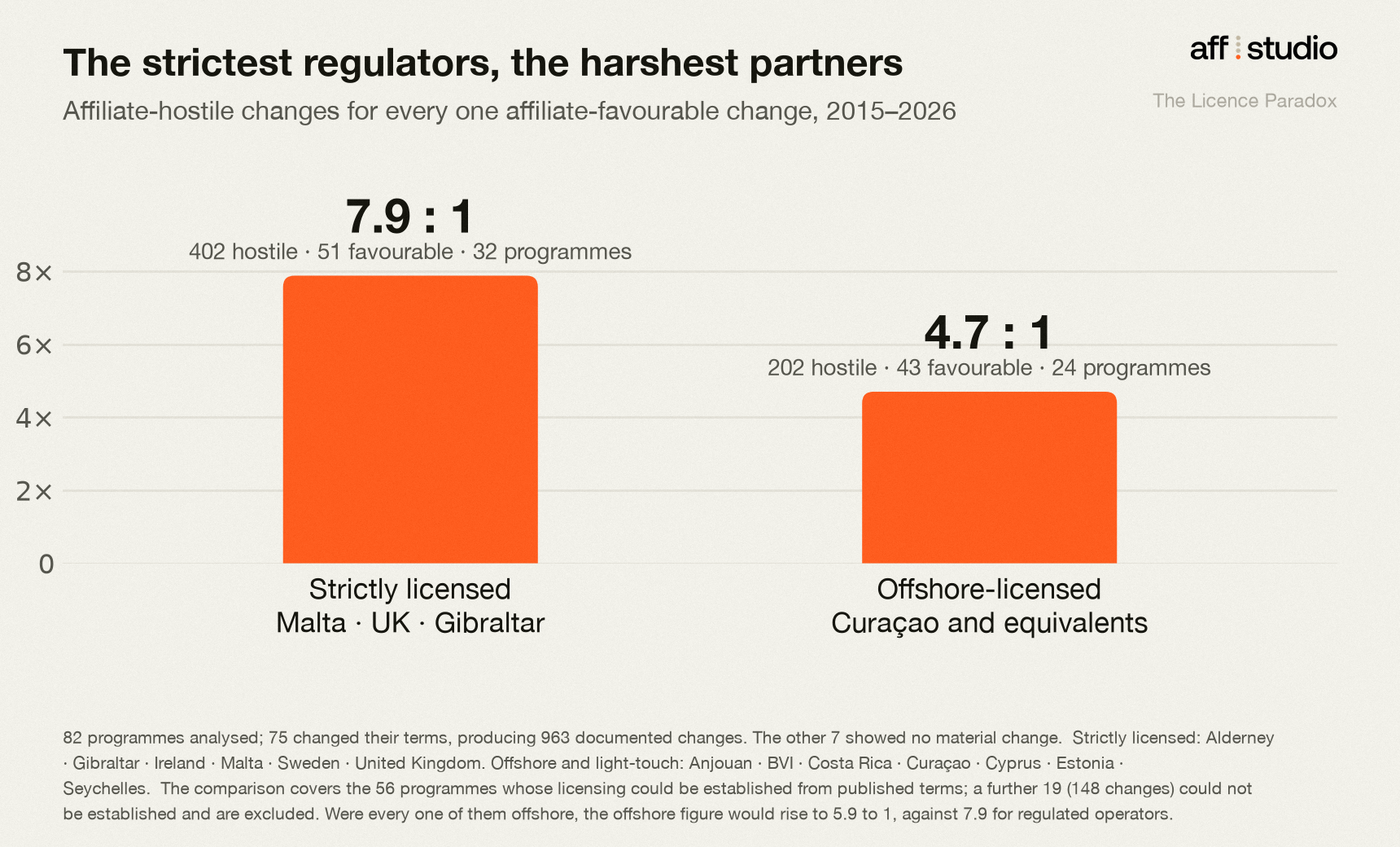
Figure 1. The strictest regulators, the harshest partners
They do not merely pay less — they reserve more power
There is a reasonable objection to everything above, and it deserves a proper answer rather than a dismissal.
Regulated operators carry costs that offshore operators do not: gaming duty, compliance headcount, licence fees, marketing restrictions. Of course their commercial terms tighten faster. That is not villainy, it is arithmetic. On this reading, "regulated operators are worse" really means "regulated operators are poorer," which is a far less interesting story.
So we split the 963 changes into two kinds.
Two kinds of clause
Commercial clauses govern how much you earn — revenue-share percentages, CPA and hybrid rates, qualification thresholds, payment timing. If the cost-pressure explanation is right, this is where the gap should be.
Conduct clauses govern whether you are paid at all — traffic forfeiture, negative carryover, and the sole-discretion powers that let an operator decide unilaterally that your traffic was invalid, your account is closed, or your balance is forfeit. Cost pressure does not require any of these. They are choices about power, not about margin.
Those are abstractions, so here is the concrete version — what each clause type actually lets an operator do to your money, which side of the split it falls on, and how often changes to it went against affiliates:
Clause type | What it lets the operator do | Kind | Hostile share |
Programme gating | Raise the bar you must clear to qualify for your rate | Commercial | 95% |
Fraud & traffic quality | Declare your traffic invalid and withhold commission on it | Conduct | 93% |
Negative carryover | Carry a player's losing month forward against your future earnings | Conduct | 82% |
Legal & governance | Decide unilaterally, at sole discretion, without appeal | Conduct | 74% |
Notice periods | Change how much warning you get before any of the above | Neither | 55% |
Notice periods sit in neither column, which is itself telling: they are the clause that governs whether you learn about the other four in time to react.
Both gaps exist. But they are not the same size.
On commercial clauses, strictly licensed operators ran 7.9 to 1 against affiliates; offshore operators, 5.0 to 1. A meaningful gap, consistent with cost pressure.
On conduct clauses, strictly licensed operators ran 16.1 to 1. Offshore operators ran 5.4 to 1.
The gap between the licensing classes is nearly three times the offshore rate on conduct — 16.1 against 5.4 — while on commercial terms the multiple is about one and a half (7.9 against 5.0). Regulated operators are not simply paying less. They are reserving markedly more discretion over whether they pay at all.
The discretion is real and it does get used — but it rarely arrives as a clause being invoked. In almost seven years I have had one account closed outright. What happens far more often is quieter: the money shrinks inside the Net Revenue formula, on traffic nobody ever disputed. A new deduction appears — admin fee, payment processing, “operational costs”, game supplier fees — and the base your percentage sits on gets smaller. Nothing gets forfeited. Nothing gets announced. Last year we reconciled six months of one GEO against a programme and found a 30% gap between what our own tracking said we had earned and what was actually paid. No clause was broken. The clause had been rewritten so that there was nothing left to break. It is not dramatic. It is arithmetic, and most affiliates have no instrumentation to detect it.
— Misha Kachanov, Chief Business Officer, SlotCatalog
The question partners almost never ask, but should, is how the RevShare formula is actually calculated. Everyone asks about the percentage. Almost no one asks whether it is based on NGR or GGR, and what that means for their payout in practice. Clarify it before signing, not after the first payment.
— Serhii Fedorenko, Head of Affiliates, GG.BET
In this study’s taxonomy, an expanding deduction list is a commercial clause. Misha describes it behaving like a conduct one: the operator never decides whether to pay you, it decides what “revenue” means. Serhii is describing the same clause from the other side of the desk — and reporting that almost nobody asks about it before signing. GG.BET is one of the 75 programmes in this study.
There is one more signal in the dataset, and it is the cleanest. Twenty-three of the 963 changes applied retroactively — altering the terms of work affiliates had already performed, either by taking effect from a date already passed or by reaching commission already earned. Fifteen of those came from strictly licensed operators, four from three offshore ones, and four from programmes whose licensing we could not establish.
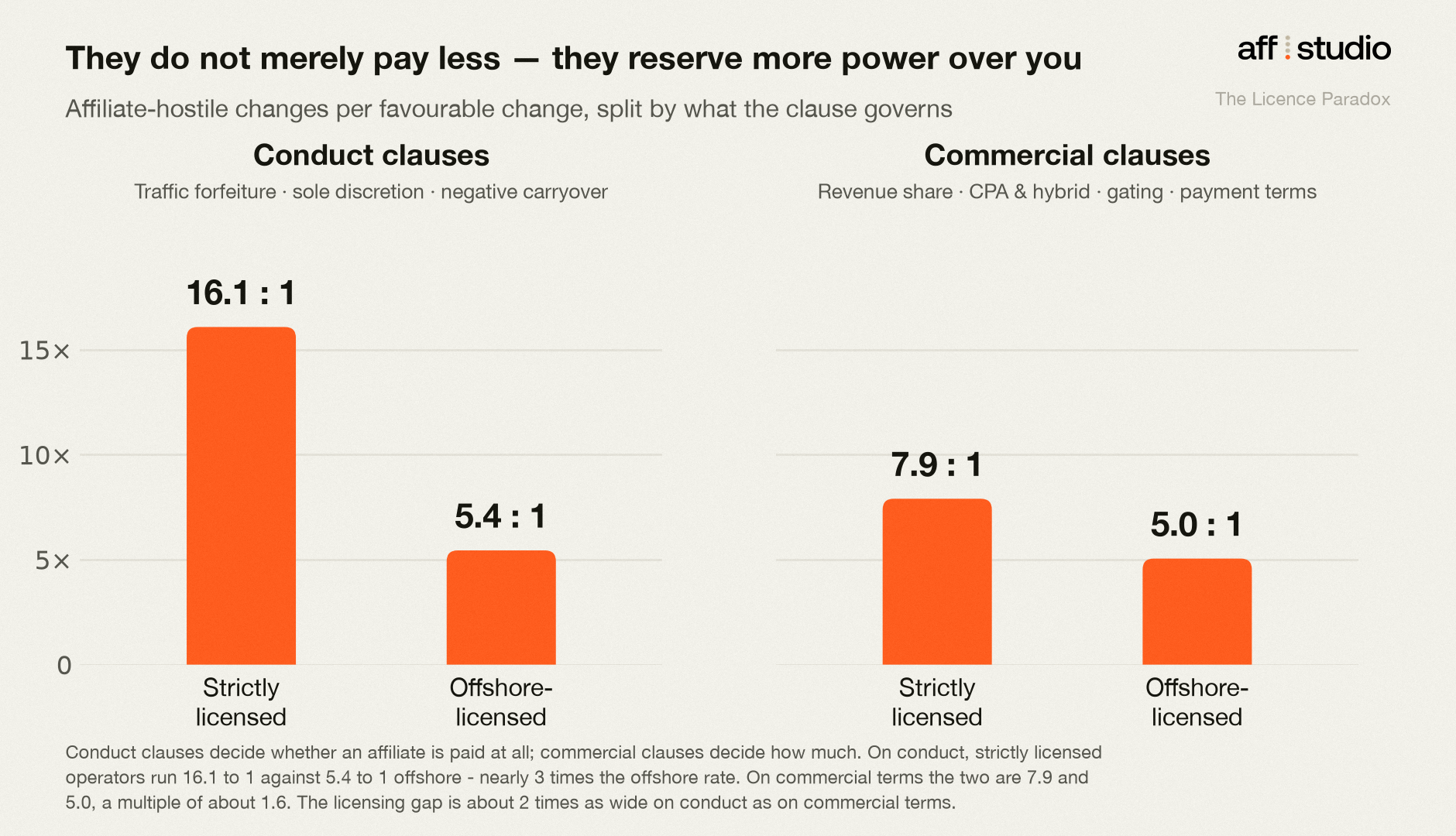
Figure 2. They do not merely pay less, they reserve more power
It is not a handful of bad actors
The industry's standard response to any finding like this is that a few cowboys are dragging down the average. It is a comfortable explanation and the data does not support it.
We sorted every programme into five tiers by size and market position: public legacy brands, multi-brand mega-networks, challenger brands, offshore Curaçao staples, and crypto-native operators. If the problem were concentrated among the small and disreputable, the tiers would separate sharply.
They do not. Every tier ran between 69% and 80% hostile changes. The most hostile tier was the challenger brands at 79.5%. The least hostile was crypto-native at 69.4%. Tier-1 regulated and public legacy operators sat at 75.3%, statistically indistinguishable from the offshore Curaçao staples at 71.6% on that measure.
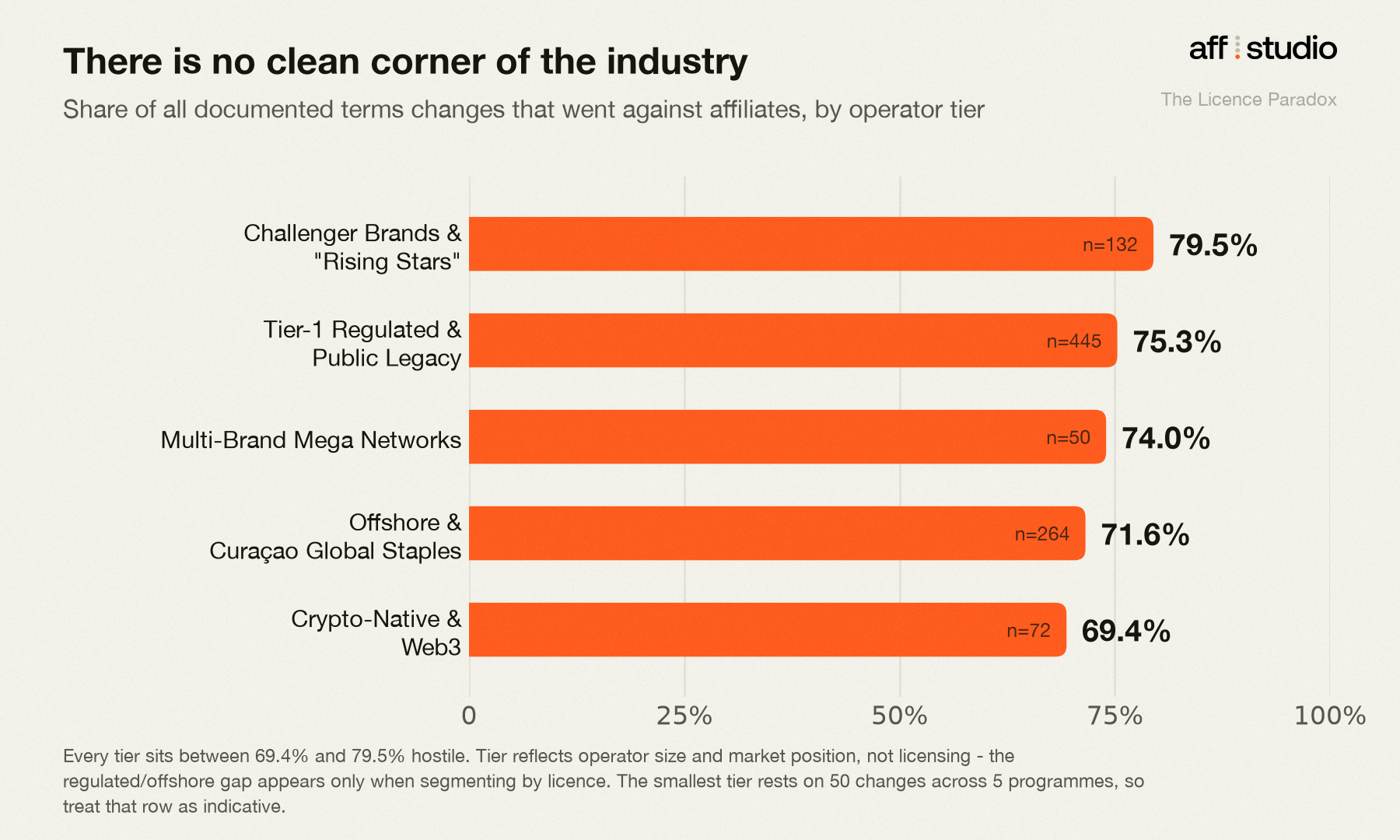
Figure 3. There is no clean corner of the industry
Industry-wide, across all 963 changes, terms moved against affiliates 6.9 times for every one time they moved in affiliates' favour.
There is one more place a reader would reasonably expect the problem to be concentrated: in time. Surely this is a recent phenomenon, something that arrived with consolidation or the 2020 boom?
It is not, and the honest answer here is duller than the alarming one. Raw counts of hostile changes do rise steeply across the decade — but so does our sample, because the web archive captured far more of these programmes in recent years than in early ones: 43 programmes logged a documented change in 2025 against 7 in 2016. Any claim that terms changes are accelerating is an artefact of that growth, and we make no such claim. Measured as a share of each year's changes — computed within the same snapshots, so coverage cancels out — the rate has been essentially flat since 2016. Between two-thirds and four-fifths of changes have gone against affiliates every single year. Not through the 2020 boom, not through consolidation, not through ten years of tightening regulation. Nothing has moved that number in either direction.
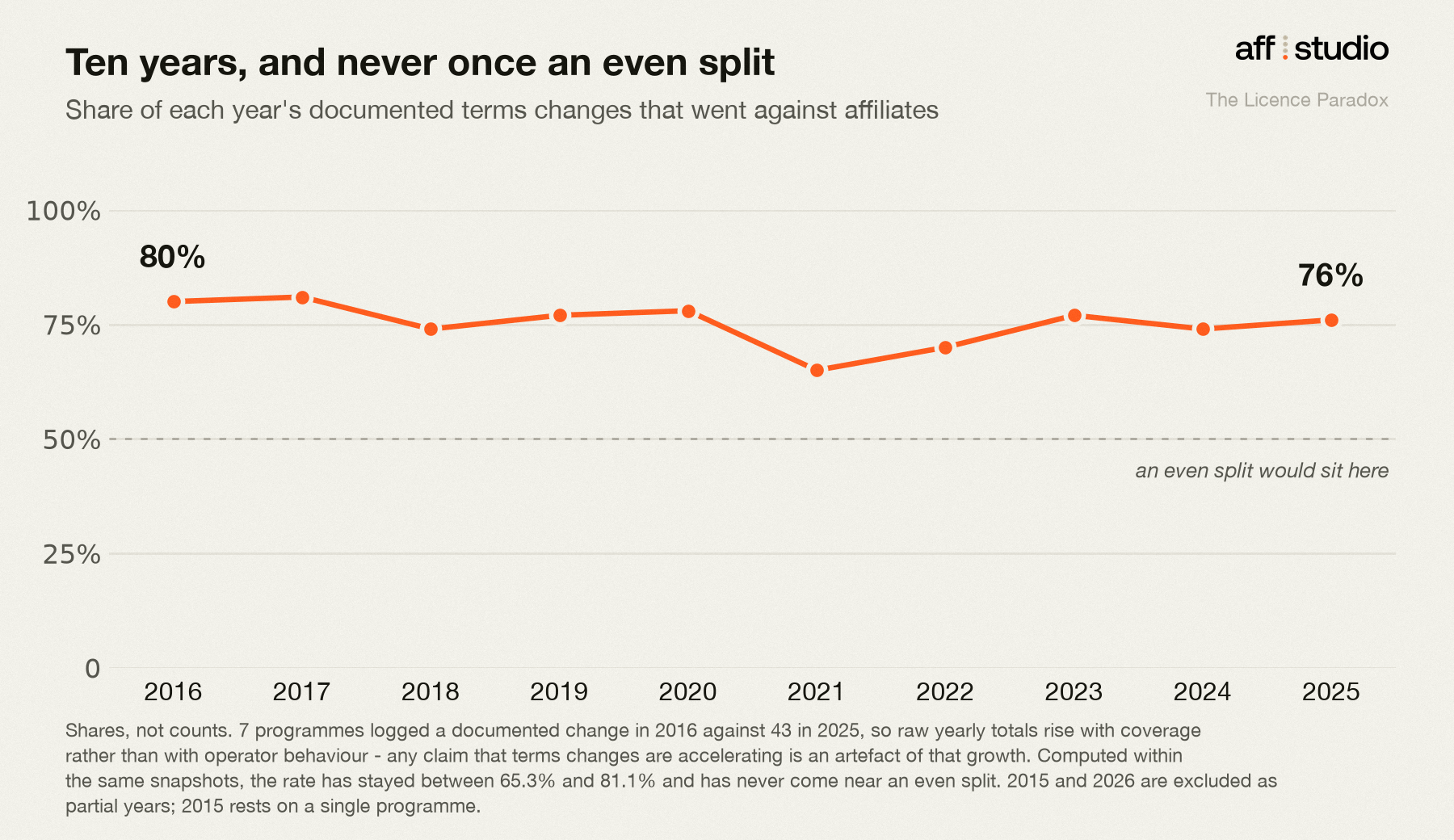
Figure 4. Ten years, and not one better year
The names, and what they actually wrote
The full ranking
Here is the full ranking. Of the 75 programmes in the study, 29 have enough archived history to be ranked fairly — at least four years of observation and at least eight documented changes — because without that floor a programme watched for two years can top the table on a handful of events. All 29 are shown, worst first, with no truncation. The rate is net hostile changes divided by the years we actually observed each programme, which is the figure published in the accompanying dataset, so every row can be reproduced from it.
# | Programme | Licensing | Observed | Hostile / Favourable | Net hostile per year |
1 | Strict | 11.33 yrs | 85 / 7 | 6.88 | |
2 | Offshore | 6.66 yrs | 38 / 6 | 4.80 | |
3 | Strict (Malta) | 10.01 yrs | 51 / 7 | 4.40 | |
4 | Offshore | 4.03 yrs | 16 / 2 | 3.47 | |
5 | Offshore | 4.02 yrs | 14 / 4 | 2.48 | |
6 | Strict | 4.85 yrs | 14 / 2 | 2.48 | |
7 | Strict | 6.60 yrs | 16 / 0 | 2.43 | |
8 | Offshore | 11.30 yrs | 29 / 4 | 2.21 | |
9 | Strict | 9.04 yrs | 22 / 2 | 2.21 | |
10 | Strict | 5.60 yrs | 12 / 0 | 2.14 | |
11 | Strict | 10.95 yrs | 26 / 3 | 2.10 | |
12 | Strict | 11.18 yrs | 24 / 2 | 1.97 | |
13 | Offshore | 4.36 yrs | 11 / 3 | 1.83 | |
14 | Strict | 8.31 yrs | 15 / 1 | 1.68 | |
15 | Not established | 9.74 yrs | 18 / 3 | 1.54 | |
16 | Not established | 8.82 yrs | 13 / 0 | 1.48 | |
17 | Not established | 4.81 yrs | 8 / 2 | 1.25 | |
18 | Strict | 4.85 yrs | 10 / 4 | 1.24 | |
19 | Strict | 6.66 yrs | 11 / 3 | 1.20 | |
20 | Strict | 8.17 yrs | 12 / 3 | 1.10 | |
21 | Strict | 5.87 yrs | 7 / 1 | 1.02 | |
22 | Offshore | 9.93 yrs | 10 / 0 | 1.01 | |
23 | Not established | 4.99 yrs | 5 / 0 | 1.00 | |
24 | Strict | 10.02 yrs | 13 / 3 | 1.00 | |
25 | Not established | 6.74 yrs | 6 / 1 | 0.74 | |
26 | Strict | 7.02 yrs | 6 / 3 | 0.43 | |
27 | Offshore | 4.50 yrs | 7 / 6 | 0.22 | |
28 | Offshore | 4.31 yrs | 2 / 3 | -0.23 | |
29 | Offshore | 5.77 yrs | 7 / 9 | -0.35 |
Table scrolls internally — all 29 ranked programmes are listed.
Read down the licensing column and you will notice something that complicates the headline, which is exactly why we are showing you all of it rather than the top five. Strictly licensed operators sit at both ends of this table: four of the worst eight, and two of the best eight. The two least hostile programmes in the study are both offshore.
The paradox is not that regulated operators produce the single worst programme in iGaming. It is that across the class, they rewrite terms against affiliates roughly twice as often relative to how often they improve them. A ranking answers "who was worst"; the licensing comparison answers "who is more likely to do this to you." They are different questions, and only the second one should change how you choose a partner.
Five clauses worth reading in the original
Some of the individual changes are worth reading in the original.
Casumo improved its notice commitment in 2016, promising that "if applicable, a written notice of the amendments will be sent to the Affiliate's registered email address" (2016 terms). By 2017 that had become "when possible, a notice of the amendments will be sent" (2017 terms).
"When possible" is doing a great deal of work in that sentence.
FortuneJack replaced a revenue-share ladder paying up to 60% at high bitcoin volumes (2022 terms) with one keyed to player counts, topping out at 30% and starting at 15% (2024 terms).
Betsson introduced a high-roller negative-carryover clause in which any player generating "negative commissionable revenue of at least €50,000" in a month has that negative balance carried forward against the affiliate's future commission (archived terms). One lucky player, and your earnings from that player run backwards for months.
LeoVegas narrowed its own liability. Where the agreement had capped LeoVegas's exposure at "the total Commission paid or payable" (2017 terms), the revised version capped it at "10% of the total Fees paid or payable by Us to You in the previous 6 months" (2018 terms). Uno Affiliates went further, capping aggregate liability at the lower of three months' commission and €10,000, in capital letters (2024 terms). Liability caps are not isolated incidents: we documented at least nine such changes across the sample, including at Melbet, 1xPartners, Gama and Mate.
Four programmes of the 75 end the decade net-positive, and two of those are artefacts: Interwetten and Vbet each have a single documented change, too thin a record to read anything into. The other two both hold Curaçao licences. BitStarz Affiliates improved its terms more often than it worsened them — nine favourable changes against seven hostile, the clearest positive record in the study. Royal Partners managed three favourable against two hostile, on a thinner record.
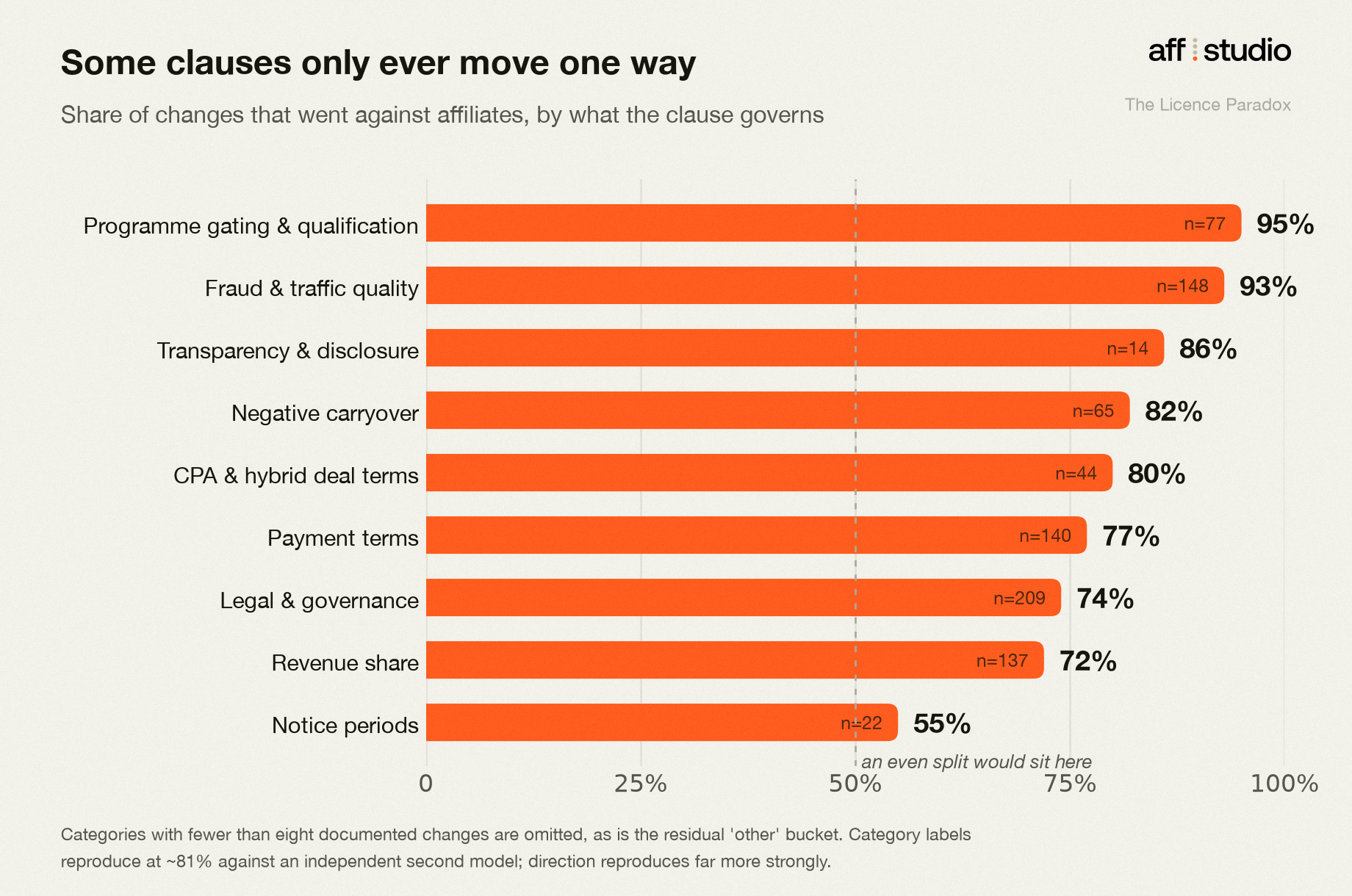
Figure 5. Some clauses only ever move one way
The EU has already decided this is unacceptable — just not here
None of the above is unlawful. Affiliate agreements are commercial contracts between businesses, and businesses may generally write what they like.
It is worth noting, though, that the European Union has already looked at this exact pattern of behaviour in an adjacent market and concluded it needed rules. Regulation (EU) 2019/1150, the Platform-to-Business Regulation, governs how online platforms treat the businesses that depend on them. Article 3(2) requires at least 15 days' notice of any change to terms and conditions, and longer where the change demands adaptation — and provides that changes made in breach of it are null and void. Article 8(a) says providers shall "not impose retroactive changes to terms and conditions," except where legally required or beneficial to the business user.
The Regulation does not apply to affiliate programmes. Its scope test in Article 2(2) covers services that let business users offer goods or services to consumers, and an affiliate refers traffic rather than selling through the operator's platform. No operator in this study is in breach of anything.
But the standard exists, and someone drew it deliberately. When app developers and marketplace sellers faced unilateral terms changes and retroactive rule-rewrites, the EU decided 15 days' notice and a ban on retroactivity were the minimum civilised floor. Nobody has yet asked whether the people driving traffic to licensed gambling operators deserve the same.
How we know
We read a decade of affiliate terms so you don't have to. We do not recommend it as a hobby.
We identified 127 iGaming affiliate programmes, located their terms pages, and pulled every distinct archived version from the Internet Archive's Wayback Machine. 95 had at least two archived versions, and 82 of those produced at least one pair of captures that could be compared — the losses in between are pages that failed text extraction or whose captures were identical. Each consecutive pair was diffed, and every material difference was classified by a language model for direction, category, severity and retroactivity — then verified by matching both the "before" and "after" wording back to the archived source text. Changes whose quotes could not be verified against the archive were discarded rather than published. That left 963 documented changes across 75 programmes. A hand-checked sample of 70 was reviewed by a human and found correct in all 70 cases, which supports an accuracy floor of roughly 95% at the lower bound of the confidence interval.
What to weigh against the findings
A reserved right is not an exercised right. Everything documented here is language operators put into their own terms. The archive shows what was reserved; it cannot show how often it was used, and this study makes no claim to know. We put that question directly to an operator. Nataliia L., Head of Acquisition at Melbet Partners told us: “Over 15 years of working with partners, we have not had cases where an already accrued commission was withheld solely because a GEO was closed or the status of a jurisdiction changed. If a payment requires additional review, the reason is usually related to a specific account, traffic source, or fraud/compliance verification.” We cannot verify that, and we cannot verify the contrary at any programme in the sample. What the record establishes is what an operator may do, not what it has done.
The tier comparison uses two measures that diverge. That 75.3% against 71.6% is a share of all documented changes, neutral ones included. The ratios used elsewhere in this piece — 6.9 to 1 and the rest — exclude neutral changes, and on that measure the two tiers separate: 8.8 to 1 against 6.3 to 1, because Tier-1 operators logged proportionally fewer changes in affiliates' favour (8.5% of their changes, against 11.4%). The claim that survives both measures is the one in the heading: no tier is clean. The smallest tier, multi-brand mega-networks, rests on 50 changes across 5 programmes, so treat that row as indicative.
Tier is not a clean cut by size. Two of the five tiers are named for regulatory posture, and the offshore-staples tier is nearly half programmes whose licensing we could not establish. So the honest version is that the regulated/offshore gap is far sharper when you segment by licensing jurisdiction than by operator tier — not that it vanishes under one and appears under the other.
Licensing could not be established for 19 programmes from their published terms, and that group is more hostile than either named class. If every one of them were secretly offshore — the worst case for our conclusion — the offshore figure would rise from 4.7 to 5.9, against 7.9 for regulated operators. The gap narrows; the direction holds. Estonia, an EU member state, is grouped with the light-touch class on its affiliate-facing regime; it accounts for 48 changes. Reclassifying it as strictly licensed moves the comparison to 7.72 against 4.43, and dropping it entirely to 7.88 against 4.43 — the gap widens either way.
Commission model made no difference. We expected CPA and hybrid programmes to drift harder than pure revenue-share. They did not. Three of the four combinations cluster between 73.8% and 75.4% hostile. The fourth sits at 80.0%, but rests on 15 changes across 2 programmes and should not be read as a difference. That finding does not support our thesis and we are reporting it anyway.
We count a change as retroactive only when the archive can prove it. Where a clause states its own effective date and that date falls inside the gap between our two snapshots, the operator may simply have published it on the day it took effect — so we exclude it, even where retroactivity looks likely. One Betsson clause was dropped on exactly this ground.
Raw counts of changes per year are not meaningful in this dataset, because the archive's coverage grew faster than the industry did. Any claim that terms changes are "accelerating" is an artefact of that growth, which is why we make no such claim. Every headline figure above is a ratio computed within the same set of archived snapshots, so uneven coverage cancels out.
The full methodology, the per-programme detail and the complete source list are in the accompanying report.
What this study establishes
Strip away the individual clauses and five things are left standing.
The licence is not a proxy for fair treatment. It is a consumer-protection instrument, and it works on the side of the business it was written for. Choosing a partner on licence quality tells you how the operator treats its players, and close to nothing about how it will treat you.
The problem is one of discretion, not margin. Regulated operators tightened commercial terms somewhat harder than offshore ones, which cost pressure explains. On conduct terms they ran nearly three times the hostile-to-favourable rate of offshore operators — 16.1 to 1 against 5.4 to 1 — which it does not. The clauses that grew fastest are the ones that decide whether you are paid at all.
It is universal, not concentrated. No tier of operator came in below 69% hostile. There is no category of company you can retreat to.
It is stable, not worsening — and it has never once come near parity. The rate has drifted between 65.3% and 81.1% for a decade without ever approaching the even split that a balanced negotiating relationship would produce.
It is documented. Every claim above rests on the operators' own published wording, captured twice, years apart, by a third party none of them controls. That was always the point: this is not an opinion about the industry's direction of travel. It is the industry's own paper trail.
What to do about it on Monday
Archive the terms yourself on the day you sign. Paste the programme's T&C URL into web.archive.org/save. It takes ten seconds, it is free, and it creates a timestamped third-party record that the operator does not control. This entire study exists because other people happened to do that. Do it deliberately.
Read the notice clause before the commission rate. The rate tells you what you earn today. The notice clause tells you whether you will find out when that changes. Only half of the changes we found to notice clauses made them stronger — 12 weakened them against 8 that improved them.
Count the instances of "sole discretion." Legal and governance clauses were the single largest category of change in the dataset. Each occurrence marks a place where your contract becomes, functionally, a request.
Get negative-carryover terms in writing, including high-roller carve-outs. 82 per cent of changes in this category went against affiliates, and the carve-outs are where the money is.
When a player wins a significant amount and requests a withdrawal, our security team runs a fairness verification on that win. If the verdict comes back clean, there is no carve-out. It is only if the review finds game fraud and the player’s account gets blocked that the affiliate team submits a request to remove that specific player from the partner’s stats. The review timeline varies case by case. There is no fixed turnaround.
— Nataliia L., Head of Acquisition, Melbet Partners
We asked what actually earns a carve-out. That is the answer, from one of the 75 programmes in this study: at Melbet Partners it is not a negotiated term at all. A clean win — the case affiliates worry about — produces nothing, and the review that might produce something runs on the operator’s own timetable. Ask anyway; an operator who will not put a trigger in writing has told you something useful about the rest of the agreement.
Stop treating the licence as a proxy for fairness. It certifies how an operator treats players. Your contract is somewhere else entirely.
I rarely make a decision based on the contract alone. Of course I read the terms, but what matters much more in practice is how the partner behaves once we start working together. I pay close attention to communication speed, transparency of reporting, postback reliability, payment consistency and, most importantly, commercial performance. A partner with average terms but excellent communication and stable results is usually a much better long-term choice than one offering generous conditions on paper but creating operational issues. Trust is built through actions rather than contract wording. We evaluate partners on real performance and day-to-day cooperation, not just on what’s written in the agreement.
— Roman Balanyk, Head of Business Development, Tips.GG
That is the right instinct, and it points at the honest limit of this study. A contract is not a forecast of how a partner will behave — it is the floor beneath that behaviour. Everything documented here is what an operator has reserved the right to do to you on a bad day. Roman is describing how you pick a good partner; this study is about what happens when a good one stops being good.
The full dataset behind this study — all 963 changes, with both archive links and the operator's own wording for each — is published openly under CC BY 4.0, along with the complete report. We would rather you checked our work than took it on trust.
As for that Betsson clause: it was still there when we last checked the archive, on 10 February 2026. The affiliates working under it were never told it had arrived.
PDF · CC BY 4.0